

On 7th December 2024, Zucoins released an article that highlighted a multitude of reasons as to why the public’s trust and confidence in CEXs has hit all-time lows.
Fast forward to 13 February 2025 and take notice of the warning drums that are beating louder and louder from within the crypto industry itself.
Small buyers of digital assets on CEXs are now suffering $billions of losses:
- Social Engineering Scams
- Pump and Dump schemes
- Excessive Fees on Useless Meme Coins
As a peer-to-peer marketplace, the Zutopia trading app was specifically developed from the ground up to minimise the above risks facing CEXs by maximising protections for small buyers/sellers of Zucoins.
What is the Crypto Industry Now Saying?
Changpeng Zhao (CZ), co-founder and former CEO of Binance, said that Binance’s token listing process is broken and flawed. CZ has called for urgent improvements as to how CEXs handle new listings.
“I think the Binance listing process is a bit broken. Exchanges must compete to list popular coins (with trading volume) as early as possible,” CZ stated.
Significantly, CZ also encouraged project teams to simply focus on building solid products rather than worrying about getting their tokens listed on CEXs.
“If your coin is actively sought after by traders, you don’t need to talk to exchanges. Work on your project, not the exchanges,” CZ advised.
A major challenge in the current crypto environment is how easily anyone can create and launch meme coins (like $TRUMP & $MELANIA) on CEXs, instantly flood the CEX with useless tokens, generate significant CEX fees and expose small buyers/sellers to massive losses.
CZ emphasized that this recent phenomenon is now leading to a sharp rise in speculative and worthless digital assets (Shit Coins) that only reward professional traders and CEXs.
According to a recent Cointelegraph report, more than 80% of all tokens listed on Binance lost value in the first six months after their debut. $Billions of retail investors funds have been lost.
1. Social Engineering Scams
Zutopia automatically authenticates user logins by checking uniquely generated cryptographic Zucoin wallet signatures without the need to store or verify user login credentials. Neither Zutopia nor its users retain any sensitive login information that can then be exploited by attackers in a social engineering scam. Attackers cannot access Zutopia accounts because neither Zutopia nor its users retain any sensitive login information that can be stolen. Importantly, Zutopia doesn’t centrally retain any Zucoins or funds owned by its users.
As an example, Coinbase is a CEX whose customers lost over $65 million in the past 2 months to social engineering scams and an estimated $300 million in the past 12 months.
Social engineering scammers successfully tricked Coinbase customers to divulge their sensitive login information by sending fake emails and spoofed web pages mimicking Coinbase’s official communication channels. Once armed with this information, the scammers simply accessed multitudes of Coinbase accounts and transferred customer owned digital assets and funds to scammer-controlled wallets or bank accounts.
This successful social engineering attack worked because Coinbase and its customers rely on sensitive information to login. Ultimately, the attackers’ were able to access Coinbase accounts by simply tricking customers to share their sensitive login information.
2. Meme Coin Pump and Dump Schemes
Zutopia is a secure, peer-to-peer marketplace specifically developed to list and trade:
- Zucoins; and
- Real world assets tokenised with Zucoins (or fractions) that prove digital ownership on the Splitchain network.
Zutopia is only focused on listing Zucoins (or tokenised fractions) that offer long term value propositions and or economic utility utilising tokenised Zucoin fractions to prove digital ownership of real world assets (e.g. real estate, art, collectibles, consumer products, shares) on the Splitchain network – Zucoin overview.
Zutopia will not be listing useless digital assets, crypto coins or Meme Coins that are pumped and dumped on CEXs.
As CZ has emphasised, CEXs are flooded with useless Meme Coins that are pumped and dumped to make profits for professional traders and to generate excessive fees for promoters and CEXs. Once playful parodies, the explosion of Meme Coins is generally tied to celebrities (Hawk Tuah Girl), politicians (President Trump), and viral trends that have turned them into highly volatile, highly risky and hugely speculative assets.
Below, we take you quickly through some of the dangers of Meme Coins.
1. Speculation and Hype: Meme coins are highly speculative and driven by social media hype rather than having any intrinsic value. Meme coins are a cryptocurrency that thrive on social media hype, internet culture, and community engagement—there’s simply no intrinsic value or use for them beyond that. Their extreme volatility means that $Billions of heavy losses are suffered by retail investors. Pump and dump schemes and market manipulation are common in this sector. Hence, Meme Coins are far more like casino chips than regulated investments.
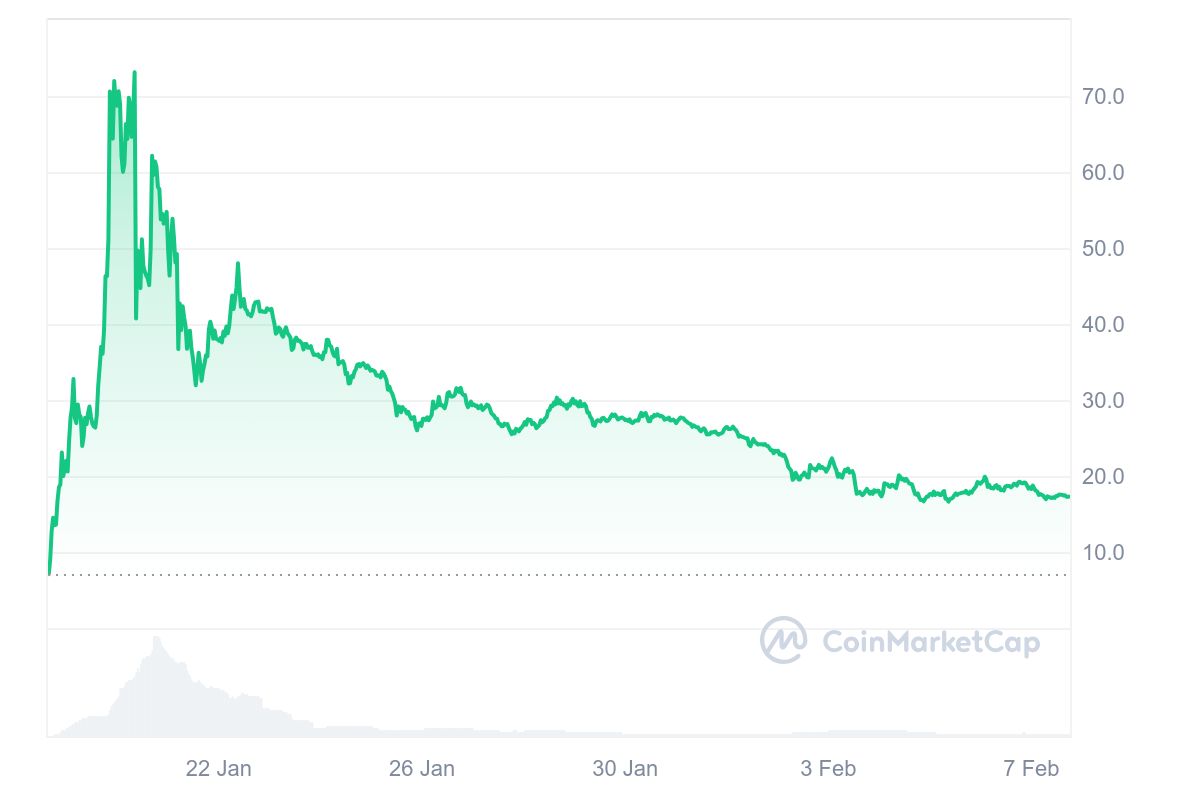
Days before his inauguration in January 2025, President Donald Trump issued a $TRUMP Meme Coin, marketing it as an “expression of support” for his views. $TRUMP’s price surged more than 200% before crashing from its all-time high of $78 to below its offering price of $17 in a matter of days. In the wake of that stunning collapse, new analysis by Bloomberg suggests $TRUMP’s dramatic fall is the result of 21 whales pulling out $214 million gobs of cash while leaving the vast majority of the $TRUMP’s faithful retail buyers with the losses. This rollercoaster pattern is the rule, not the exception, for all Meme Coins.
2. Criminal Risks: Authorities have long highlighted the major criminal risks associated with Meme Coins. For example, in October 2024, U.S. authorities charged 18 individuals and major crypto firms with various frauds against everyday investors. These schemes depended on central players in the sector—so-called “market makers”—who artificially inflated trading volumes and prices through wash trades to create fake transactions and false buyer interest for unsuspecting investors.
3. Extreme volatility: Meme Coins experience unpredictable price swings, leading to potential gains or significant losses.
4. Lack of fundamental value: Most Meme Coins lack real-world applications, strong development teams, or long-term viability.
5. Regulatory uncertainty: Future legal crackdowns or re-classifications could impact their liquidity and market presence.
6. Security risks: By listing on CEXs, Meme Coin buyers are subject to social engineering scams (see above), hackers and other criminal operators.
7. Liquidity issues: Many Meme Coins have low trading volumes, making selling holdings at desired prices difficult.
8. The Bottom Line: Retail buyers should approach Meme Coins with extreme caution, more akin to gambling and entertainment rather than an investment for a long term portfolio.
3. Excessive Fees on Useless Meme Coins
Zutopia doesn’t list or trade Meme Coins. Zucoins (and the tokenised Zucoins or their fractions) are traded directly between peers off market. Settlement funds are paid directly between peers using card to card transfers. Zutopia only hosts and stores data base listings created by users. Zutopia doesn’t rely on excessive fees generated by useless digital assets or Meme Coin trading.
Meme Coins are currently attracting tons of speculation on CEXs. By artificially inflating trading volumes and prices through wash trades, fake transactions and false buyer interests are created. In the end, the promoters and CEXs don’t care. They are just interested in the extraordinary windfall of trading fees generated by these useless digital assets and Meme Coins.
Frenzied speculation around Meme Coins helps drives price volatility. This means more trading opportunities and therefore more trading fees for the CEXs. Through risky bets, professional traders pile into Meme Coins to try and strike it rich at the expense of small retail buyers. For example, the trading platforms administering the $TRUMP Meme Coins also struck it rich. Current estimates put the total transaction fees earned at around $100 million. In the meantime, CEXs continue to generate $Billions in trading fees, no matter whether the crypt market goes up or down.